
Maha Ayurved | Pune
Ayurvedic PCOD & PCOS Treatment in Pune: Restoring Hormonal Balance, Naturally
Personalised Ayurvedic care for PCOD and PCOS, shaped around your symptoms, history and goals.
Understanding PCOD and PCOS
Polycystic ovary syndrome (PCOS) is a hormonal and metabolic condition that can affect menstrual cycles, ovulation, skin, hair growth and long-term metabolic health. PCOD is a commonly used term for similar ovarian and menstrual concerns, although PCOS is the more established clinical diagnosis.
The two terms are often used interchangeably in everyday conversation. However, a proper medical assessment is important because irregular periods and other symptoms can have several different causes.
What is PCOS?
PCOS may involve irregular or absent ovulation, higher androgen levels, and polycystic ovarian morphology on ultrasound. Not every woman with PCOS has all these features, and the diagnosis cannot be made from an ultrasound finding alone.
What is the difference between PCOD and PCOS?
PCOD is frequently used in India to describe polycystic ovarian concerns. PCOS refers to a recognised endocrine condition with reproductive, hormonal and sometimes metabolic features. The appropriate diagnosis depends on symptoms, medical history, examination and investigations.

Common Symptoms of PCOD and PCOS
PCOS does not present in the same way for everyone. Some women experience several symptoms, while others notice only one or two.
Irregular or missed periods
Menstrual cycles that are unusually infrequent, unpredictable or absent may indicate an ovulation-related problem and should be assessed.
Acne and oily skin
Changes in androgen levels can contribute to persistent acne, particularly around the face, jawline and chin.
Hair fall and unwanted facial hair
Some women experience scalp hair thinning or increased facial and body hair. Other hormonal conditions can cause similar changes, so appropriate evaluation matters.
Weight changes and metabolic concerns
PCOS may be associated with insulin resistance and an increased risk of metabolic complications. Weight changes are not universal, and PCOS can occur in people of different body sizes.
Fertility and ovulation concerns
Irregular ovulation may make conception more difficult for some women. PCOS does not automatically mean infertility, and effective fertility treatments are available.
When to get assessed
Persistent menstrual irregularity, rapidly worsening acne or hair changes, or difficulty conceiving deserve a proper medical assessment.
What Causes PCOS?
PCOS does not have one single cause. Genetics, hormonal regulation, insulin resistance and other biological factors may contribute to its development.
Lifestyle can influence metabolic health and symptom management, but PCOS should not be attributed simply to poor habits or a lack of discipline.
Factors that may be associated with PCOS include
- Increased androgen levels.
- Insulin resistance and changes in glucose metabolism.
- Irregular ovulation and menstrual cycles.
- A family history of PCOS or related metabolic conditions.
Ayurvedic Treatment for PCOD and PCOS in Pune
At Maha Ayurved, the starting point is understanding the person's symptoms, medical history, current medicines, lifestyle and treatment goals.
Ayurveda uses concepts such as Dosha balance, Agni, and Aartava in its traditional understanding of reproductive health. These concepts inform an Ayurvedic practitioner's assessment, but they do not replace modern PCOS diagnostic criteria.
Depending on the assessment, an Ayurvedic care plan may involve the following components where clinically appropriate.
Personalised Ayurvedic consultation
The consultation helps establish the nature and duration of symptoms, menstrual history, current medication use and relevant health concerns. Existing investigations may be reviewed, and further medical assessment may be recommended when needed.
Individualised Ayurvedic medicines
A qualified Ayurvedic physician may consider appropriate formulations after evaluating the patient's needs, medical history, contraindications and current medication. No single Ayurvedic medicine is suitable for everyone with PCOS.
Panchakarma and other therapies
Panchakarma or other Ayurvedic procedures are considered only when clinically appropriate following individual assessment. Not every person with PCOS requires Panchakarma, and it is not a guaranteed way to restore ovulation or reverse the condition.
Diet and lifestyle guidance
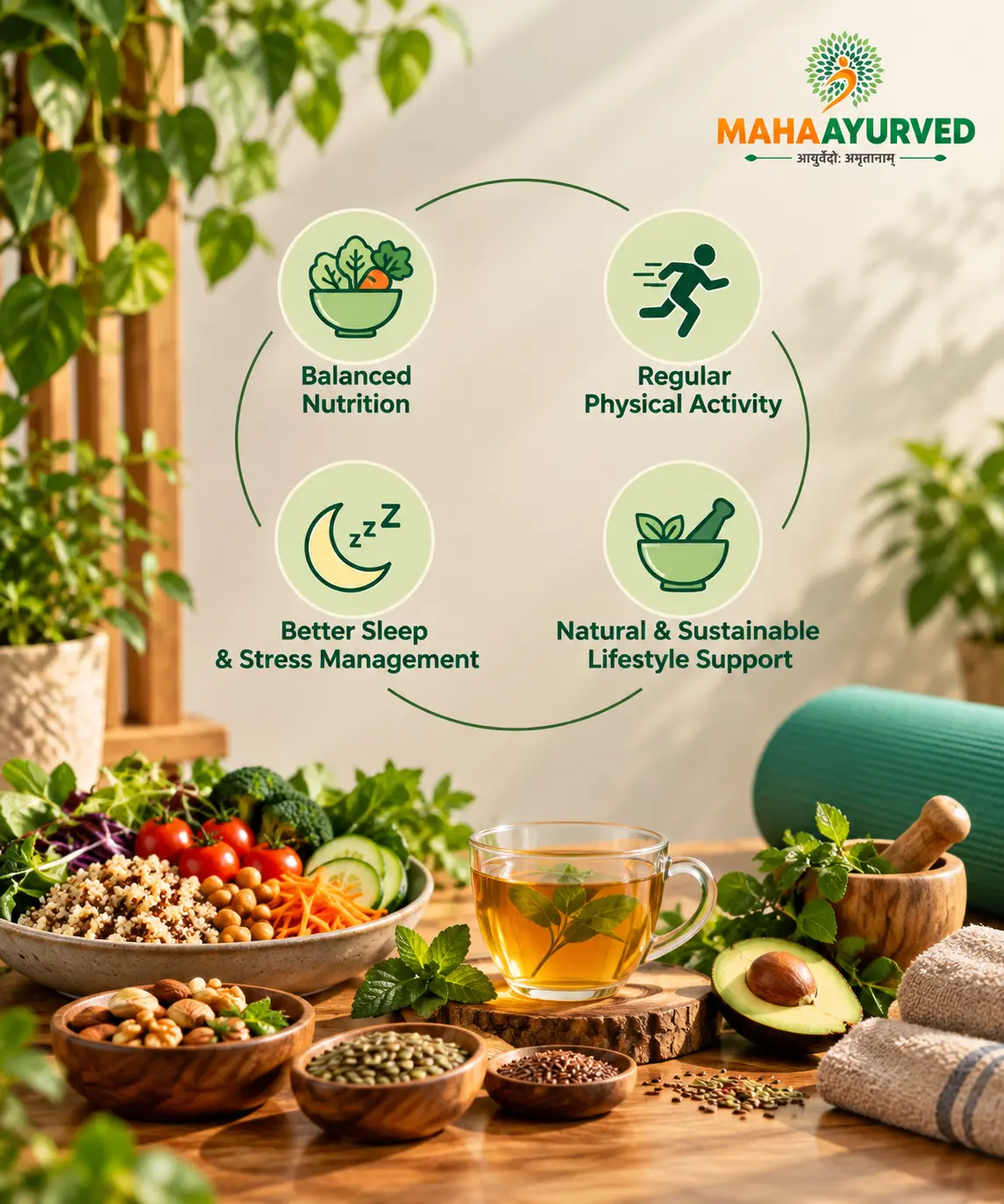
A sustainable eating pattern, regular physical activity, adequate sleep and stress-management practices can support overall and metabolic health. Recommendations are practical, personalised and compatible with the patient's existing medical care.
Follow-up and progress assessment
Progress is evaluated against the individual's goals, symptoms and relevant clinical indicators. Menstrual changes alone do not necessarily establish that all aspects of PCOS are improving.
An Ayurvedic Perspective on PCOS
In traditional Ayurvedic practice, the assessment may consider Dosha, Agni, Ama and Aartava-related concepts. The relevance of these concepts varies according to the practitioner's clinical assessment.
Dosha
A traditional framework used to understand individual patterns of health and imbalance.
Agni
The Ayurvedic concept associated with digestion and transformation.
Ama
A traditional concept used in Ayurvedic assessment.
Aartava
A term associated with female reproductive tissue or menstrual and reproductive functions in Ayurvedic literature.
These are traditional explanatory frameworks, not scientifically established substitutes for hormonal tests, metabolic assessment or a gynaecological diagnosis.
Diet and Lifestyle Support for PCOS
Lifestyle guidance should support health without relying on extreme restrictions or promises of a quick hormonal reset.
Focus on balanced nutrition
Include a variety of vegetables, fruits, whole grains, protein-rich foods, pulses, nuts and other foods that suit your nutritional needs. An individualised meal plan may help support sustainable eating habits.
Stay physically active
Choose activities you can maintain consistently, such as walking, strength training, cycling or yoga, according to your abilities and medical advice.
Prioritise sleep and stress management
A consistent sleep routine and manageable stress-reduction practices can support general wellbeing. Persistent anxiety, low mood or sleep difficulties deserve appropriate professional attention.
Avoid self-prescribing medicines
Do not start herbal products or stop prescribed medicines without discussing the decision with the relevant qualified healthcare professional. Herbal preparations can have side effects and interactions.
Why Consider Maha Ayurved for PCOD/PCOS Care?
Choosing a clinic should involve more than a treatment promise. Patients should understand who will assess them, how the plan will be personalised and how progress will be reviewed.
At Maha Ayurved, our focus is on
- Individual assessment rather than a one-size-fits-all prescription.
- Appropriate Ayurvedic guidance based on the consultation.
- Practical diet and lifestyle recommendations.
- Clear communication about treatment options, limitations and safety.
- Referral or coordination with a gynaecologist when required.
Frequently Asked Questions About PCOD and PCOS
What is the difference between PCOD and PCOS?
PCOD is a commonly used term for polycystic ovarian concerns, while PCOS is a recognised hormonal and metabolic condition. The terms are often used interchangeably, but diagnosis requires assessment of symptoms and relevant clinical findings.
Can PCOD or PCOS be managed with Ayurveda?
Ayurvedic care may be considered as a complementary approach for individual wellbeing and symptom management. Evidence for specific Ayurvedic treatments remains limited, and treatment should not replace appropriate medical assessment or established PCOS care.
Which Ayurvedic medicine is best for PCOS?
There is no single medicine that is best for everyone. The suitability of any formulation depends on the individual's assessment, other medicines, health conditions and potential interactions. Consult a qualified practitioner rather than self-prescribing.
Can PCOS cause irregular periods?
Yes. Irregular or absent ovulation can lead to irregular menstrual cycles in PCOS. Persistent menstrual irregularity needs assessment, especially when periods are absent for a prolonged period.
Can women with PCOS become pregnant?
Yes. Many women with PCOS become pregnant, naturally or with medical assistance. Treatment depends on the person's ovulation, reproductive goals and overall health.
Does PCOS always cause weight gain?
No. PCOS can occur at different body sizes. Some people experience weight changes or insulin resistance, while others do not. Care should be personalised and should avoid weight-based assumptions.
Can PCOS cause acne and hair fall?
PCOS-related androgen changes can contribute to acne, scalp hair thinning and increased facial or body hair. Other causes are possible, so persistent or rapidly worsening symptoms should be evaluated.
How long does Ayurvedic treatment for PCOS take?
There is no universal treatment duration. Progress depends on the individual's symptoms, treatment plan and other health factors. Your physician will explain any expected timeline, and we do not guarantee results.
Is Panchakarma necessary for PCOD treatment?
No. Panchakarma is not automatically necessary for every person with PCOS. A qualified practitioner assesses suitability, potential risks and contraindications before recommending any procedure.
Can I take Ayurvedic medicines along with prescribed PCOS medication?
Possibly, but this should be discussed with your treating doctors. Some herbal products can interact with medicines or affect health conditions. Do not stop or change prescribed treatment without medical guidance.
What tests may be needed to diagnose PCOS?
Assessment may include medical and menstrual history, physical examination, selected hormonal or metabolic tests and, when indicated, pelvic ultrasound. The exact investigations depend on age, symptoms and the clinician's assessment.
Where can I enquire about Ayurvedic PCOS treatment in Pune?
You can contact Maha Ayurved to ask about a consultation, available services and the appropriate next steps. Our team will confirm appointment availability, clinic details and your physician's credentials before you book.
Book a PCOD/PCOS Consultation in Pune
If you are experiencing irregular periods, acne, unwanted facial hair, hair thinning or concerns about fertility, consider seeking a qualified medical assessment.
Maha Ayurved can discuss appropriate Ayurvedic care based on your individual needs. Your consultation should also address whether further gynaecological or metabolic evaluation is necessary.
Ayurvedic clinic in Wakad
Arogyam Dhansampada, Vrundavan Society, Datta Mandir Rd, opp. Shakti Sports, Wakad, Pimpri-Chinchwad, Pune
Clinic hours: Mon to Sun, 10am to 9pm
Get directionsAyurvedic clinic in Kasarwadi
Shop no 12 and 13, Vishal Residency, near Pride Motors, Laxman Krupa Housing Society, Kasarwadi, Pimpri-Chinchwad, Pune 411034
Clinic hours: Please call to confirm timings
Get directionsThis page is for general information and is not a substitute for medical advice, diagnosis or emergency care. Results vary between individuals.